









Solar Panel Guide: Mono vs Bifacial

Solar Panels: Mono Vs Bifacial
Choosing the right solar panels is one of the most important decisions you’ll make when investing in a solar system. Two of the most popular options available today are monocrystalline and bifacial solar panels. While they may look similar at first glance, they work slightly differently and are designed for different applications.
In this guide, we’ll explain the differences in simple terms, helping you decide which panel type is the best fit for your home or business.
What Are Monocrystalline Solar Panels?
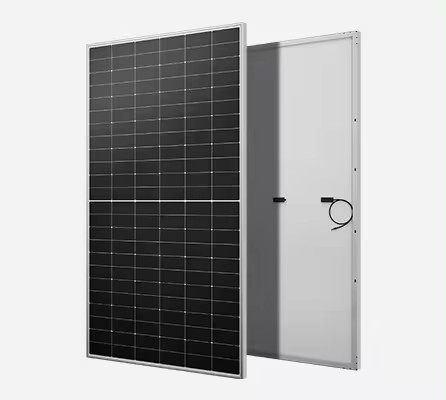
Monocrystalline solar panels are the most common type of solar panel installed on residential homes in South Africa. They are manufactured using high-purity silicon, allowing them to convert sunlight into electricity very efficiently.
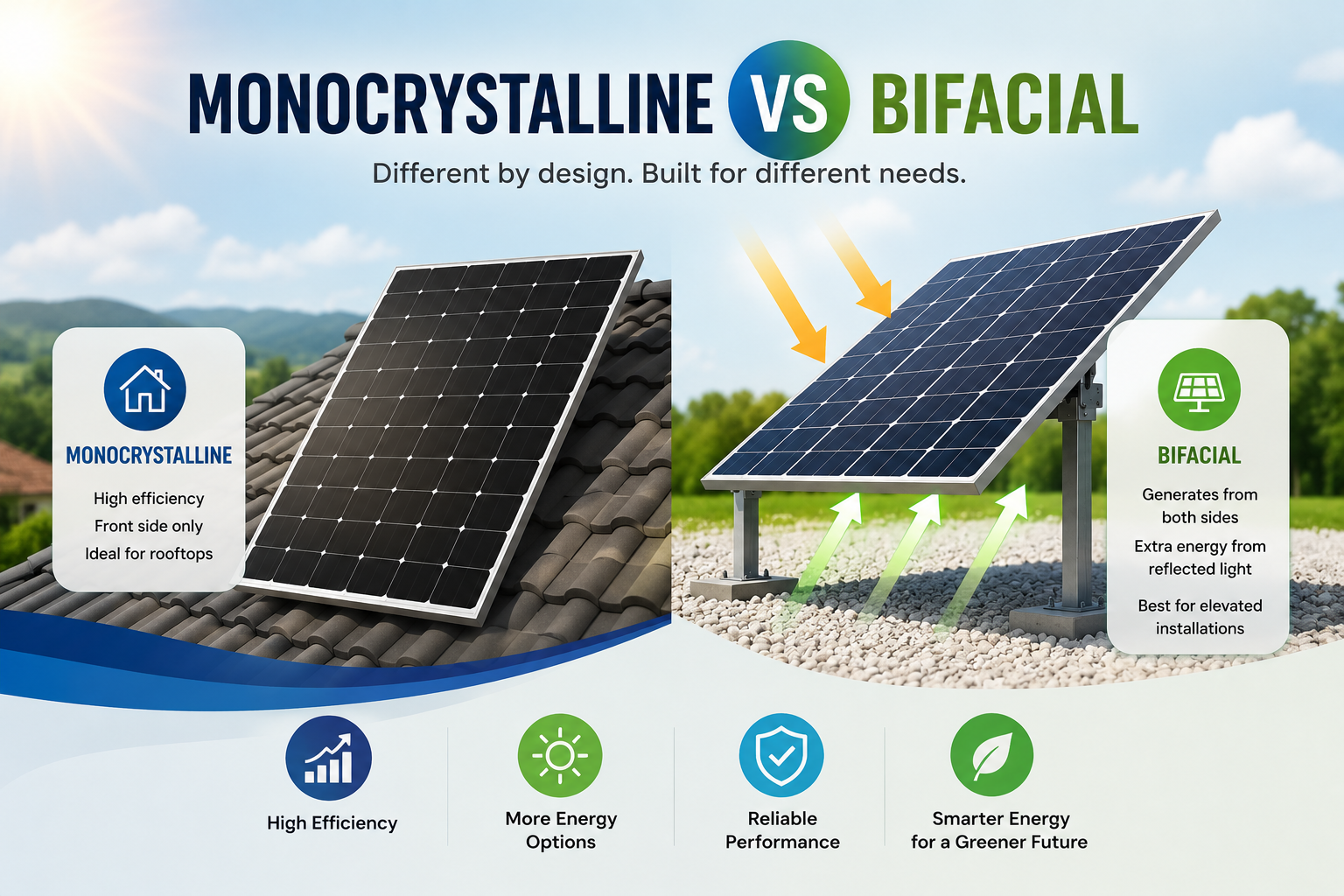
These panels only generate electricity from the front side, which faces the sun.
Because of their high efficiency, excellent reliability and long lifespan, monocrystalline panels have become the preferred choice for most homeowners. They typically achieve efficiencies of around 20% to 23%, making them ideal where roof space is limited.
What Are Bifacial Solar Panels?
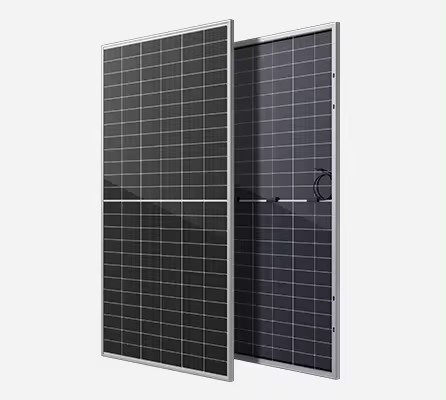
Bifacial solar panels are built using solar cells that can produce electricity from both the front and the back of the panel.
The front captures direct sunlight, while the rear captures reflected sunlight from surfaces below the panel, such as:
- White concrete
- Light-coloured gravel
- Painted roofs
- Snow (in colder countries)
This additional reflected light can increase the total amount of electricity generated—but only if the installation allows sufficient light to reach the back of the panel. Bifacial panels can produce 5% to 20% more energy, depending on the installation conditions.
How Do Bifacial Panels Work?
Imagine standing in bright sunlight while wearing a white shirt. Not only does the sun shine directly on you, but the white shirt also reflects light back onto your face.
A bifacial panel works in a similar way.
The front collects direct sunlight, while the rear collects light reflected from the surface underneath. The more reflective that surface is, and the more space beneath the panel, the greater the additional energy production.
Which Performs Better in South African Conditions?
South Africa enjoys some of the best solar conditions in the world, but our high temperatures also affect solar panel performance.
Modern monocrystalline panels are designed with excellent temperature performance and continue producing power efficiently, even during extremely hot summer days. Temperature coefficient is just as important as the panel’s efficiency rating because panels can operate well above 60°C on rooftops.
For most South African homes:
- Monocrystalline panels provide excellent performance.
- Bifacial panels offer only a small improvement on standard rooftops.
- The additional investment is often better spent on a larger battery or extra solar panels.
Choose Monocrystalline Panels if:
- ✅ You have a standard tiled or metal roof.
- ✅ You want the best value for money.
- ✅ You want maximum reliability.
- ✅ Roof space is limited.
- ✅ You're installing a residential solar system.
Best Application for Monocrystalline:
- Residential homes
- Small businesses
- Roofs with limited space
- Roof-mounted solar systems
- Off-grid systems
- Backup power systems
Choose Bifacial Panels if:
- ✅ Your panels will be elevated above the ground.
- ✅ You have a white concrete or reflective surface underneath.
- ✅ You're installing a commercial or ground-mounted system.
- ✅ You want to maximise production from a purpose-built solar installation.
Best Application for Bifacial:
- Ground-mounted solar farms
- Carports
- Commercial buildings with white roofs
- Elevated steel mounting structures
- Agricultural solar installations
Our Recommendation
For the vast majority of South African homeowners, high-quality monocrystalline panels remain the best choice.
They offer an excellent balance of efficiency, durability, performance, and value for money. While bifacial panels are an impressive technology, their additional energy production is often limited on standard residential rooftops.
If you’re planning a ground-mounted system, solar carport, or commercial installation with reflective surfaces, bifacial panels can provide worthwhile gains. However, for most homes, investing in quality monocrystalline panels—and pairing them with a well-designed inverter and battery system—will deliver the best long-term return on investment. This aligns with current performance expectations for South African residential installations.